How to Invest $1,000 at Age 18 with No Job: A Practical Guide
Your first $1,000 can grow into a substantial sum over decades. Here's how to invest it wisely when you're just starting out with no income.

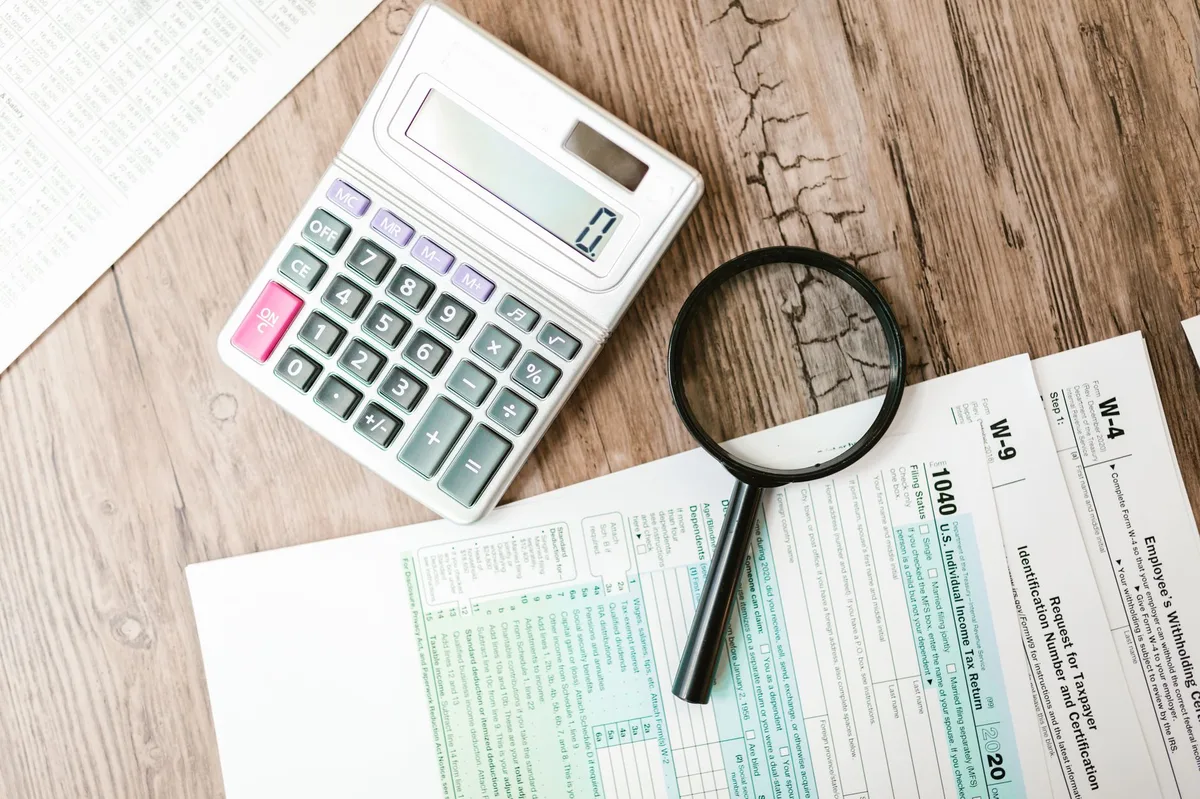
Pexels - Polina Tankilevitch · original
In this article
Turning 18 with $1,000 in hand puts you ahead of most of your peers. That money represents opportunity, but without earned income and while still in high school, your investment path looks different from the standard advice. This guide walks you through exactly how to put that money to work in a way that fits your current situation.
The good news: time is your greatest asset. Money invested at 18 has potentially 50 years or more to compound. The challenge: you have constraints that limit certain account types and require careful planning about liquidity.
Step 1: Determine If You Should Invest at All
Before opening any investment account, ask yourself three critical questions about this $1,000.
Will you need this money in the next 2-3 years? If you are headed to college and have no other savings, this money might serve you better as an emergency fund or textbook budget. If you will need it for a car, first apartment deposit, or other near-term expense, a high-yield savings account makes more sense than stocks. According to the Consumer Financial Protection Bureau, emergency savings should be liquid and accessible (CFPB, 2026).
Do you have any other cash reserves? At 18 with no job, you have limited ability to replace this money quickly if an emergency hits. A general rule is to keep at least $500 to $1,000 in a savings account before investing, but your situation might require keeping the full amount liquid until you have steady income.
How did you get this money? If it came from a graduation gift, tax refund, or savings from a previous job, you have more flexibility. If it is truly all the cash you have in the world, reconsider putting it at risk in the stock market.
If you decide that some or all of the $1,000 should stay liquid, open a high-yield savings account at an online bank. As of October 2026, competitive rates hover around 4.0% to 4.5% APY. That earns you $40 to $45 per year with zero risk to principal and full FDIC insurance up to $250,000.
Assuming you have decided to invest at least part of this money, move to step two.
Step 2: Choose the Right Investment Account
Your lack of earned income closes some doors but leaves others open. Here are your realistic options.
Taxable Brokerage Account (Your Best Option)
A standard individual brokerage account has no income requirements, no contribution limits, and full flexibility. You can open one at Fidelity, Charles Schwab, or Vanguard with no minimum deposit. You can buy and sell stocks, ETFs, and mutual funds. Capital gains and dividends are taxable, but at your likely income level, you will pay 0% federal tax on long-term capital gains if your taxable income stays below $47,025 for 2026 (the threshold adjusts annually for inflation).
This is the account type most 18-year-olds with no job should use. It requires no parent involvement, gives you full control, and has no withdrawal penalties.
Roth IRA (Only If You Have Earned Income)
A Roth IRA is the gold standard for young investors because contributions grow tax-free forever and you can withdraw contributions (not earnings) anytime without penalty. The problem: you can only contribute up to the amount you earned from a job in the same year. If you made $0 in W-2 or 1099 income in 2026, you cannot contribute to a Roth IRA for 2026, as outlined in IRS Publication 590-A (IRS, 2026).
If you pick up even a part-time job before December 31, 2026, and earn $1,000 or more, you can contribute that amount to a Roth IRA for the 2026 tax year (you have until April 15, 2027 to make the contribution). In that case, open the Roth IRA and prioritize it over a taxable account.
Custodial Account Already in Your Name
If your parents opened a custodial account (UTMA or UGMA) for you as a minor, it likely transferred to your control when you turned 18 (transfer age varies by state, but 18 or 21 are common). If you already have such an account, you can deposit your $1,000 there and invest it. Check with the brokerage to confirm the account is now in your sole name.
What to Avoid
Do not use a 529 college savings plan unless you are certain the money will go toward qualified education expenses. Withdrawals for non-education purposes incur a 10% penalty plus income tax on earnings. Do not open a traditional IRA. At your age and tax bracket, the Roth structure is superior, and you need earned income for either type anyway.
Step 3: Select Your Investments
Once your account is open, you face the most important decision: what to buy. At 18 with $1,000, simplicity and diversification matter more than chasing high returns.
Index Funds and ETFs: The Smart Default
Foundational finance texts such as Principles of Finance from OpenStax explain that broad diversification reduces risk without sacrificing long-term returns. The simplest way to achieve this is a total stock market index fund or ETF.
Top choices for your first $1,000 include:
- Vanguard Total Stock Market ETF (VTI): Owns shares in nearly every publicly traded U.S. company. Expense ratio of 0.03%. One share costs around $280 as of late 2026, so $1,000 buys you three shares with a bit left over.
- Schwab U.S. Broad Market ETF (SCHB): Similar total-market exposure, 0.03% expense ratio.
- Fidelity ZERO Total Market Index Fund (FZROX): Zero expense ratio, but it is a mutual fund (not an ETF) and requires a Fidelity account. No minimum investment.
If you want global diversification, consider:
- Vanguard Total World Stock ETF (VT): Covers U.S. and international stocks in one fund. Expense ratio 0.07%.
Why Not Individual Stocks?
Picking individual stocks requires research, time, and a higher risk tolerance. With only $1,000, buying shares in two or three companies gives you no real diversification. If one company stumbles, you could lose a significant portion of your investment. Index funds spread your $1,000 across hundreds or thousands of companies, which smooths out volatility.
What About Bonds?
At 18, you have decades ahead of you. Bonds provide stability but lower long-term returns than stocks. Most financial advisors recommend young investors hold 90% to 100% stocks. You can add bonds in your 30s or 40s when preserving capital matters more.
Dollar-Cost Averaging vs. Lump Sum
You have two ways to deploy your $1,000: invest it all at once, or spread purchases over several months. Research shows lump-sum investing usually wins over time because markets trend upward. However, if the thought of a sudden market drop right after you invest keeps you up at night, split your $1,000 into four $250 purchases over four months. This reduces timing risk and helps you learn how markets fluctuate.
Step 4: Execute Your First Trade
Opening the account and placing your first order takes less than an hour if you have your information ready.
Open Your Account
Go to the website of your chosen brokerage (Fidelity, Schwab, or Vanguard are the largest and most reputable). Click on “Open an Account” and select “Individual Brokerage Account” (or “Roth IRA” if you have earned income). You will need:
Read also: 6 Smart Ways to Invest Your Tax Refund in 2026
- Your Social Security number
- A government-issued ID (driver’s license or passport)
- Your bank account and routing number for transferring money
Most brokerages approve accounts within minutes. Some may take one business day if additional verification is needed.
Fund Your Account
Link your bank account and initiate an electronic transfer (ACH) of $1,000. This typically takes 1 to 3 business days to clear. Some brokerages give you immediate buying power before the cash fully settles, but this varies.
Place Your Order
Once the money is in your account, search for the ticker symbol of your chosen fund (for example, VTI for Vanguard Total Stock Market ETF). Click “Buy” or “Trade.”
You will see two order types:
- Market Order: Buys at the current price immediately when the market is open. Simple and fine for your first trade in a liquid ETF.
- Limit Order: Buys only if the price drops to your specified level. Useful if you want to wait for a dip, but unnecessary for a long-term index fund purchase.
Enter the dollar amount ($1,000) or the number of shares. Most brokerages now support fractional shares, meaning you can invest exactly $1,000 even if one share costs $280. If fractional shares are not available, buy as many whole shares as you can afford and leave the remainder in cash (you can invest it later or keep it as a small emergency cushion).
Review the order and submit. You will receive a confirmation, and the shares will appear in your account.
Common Mistakes to Avoid
Young investors with their first $1,000 often stumble in predictable ways. Avoid these traps.
Chasing Hype and Trends
Cryptocurrencies, meme stocks, and options trading flood social media with stories of quick riches. The reality: most people lose money. According to the SEC, speculative investments carry high risk and are unsuitable for money you cannot afford to lose (SEC, 2026). Your $1,000 will build more wealth in a boring index fund than in a gamble on the next viral coin.
Paying High Fees
Some brokers and funds charge account maintenance fees, trading commissions, or expense ratios above 0.50%. Over decades, these fees compound into thousands of dollars in lost returns. Stick with zero-commission brokers (Fidelity, Schwab, Vanguard) and funds with expense ratios below 0.10%.
Panic Selling During Downturns
Markets drop. The S&P 500 has fallen 20% or more multiple times in history, and it always recovered. If you invest your $1,000 today and the market drops 15% next month, your account will show $850. Do not sell. The loss is only real if you sell. Stay invested, and history suggests your account will recover and grow over time.
Ignoring Tax Implications
In a taxable brokerage account, selling investments for a profit triggers capital gains tax. Hold investments for more than one year to qualify for the lower long-term capital gains rate (0% at low income levels). In a Roth IRA, this does not matter because growth is tax-free, but remember you need earned income to contribute.
Neglecting to Reinvest Dividends
Index funds pay small dividends quarterly. Most brokerages offer automatic dividend reinvestment (DRIP), which uses those dividends to buy more shares. Turn this on. It costs nothing and accelerates compounding.
Frequently Asked Questions
Can I really make a difference investing just $1,000?
Yes. If you invest $1,000 at age 18 and it grows at an average annual return of 10% (the historical stock market average), it will grow to approximately $117,000 by age 65 without any additional contributions. Add even small monthly deposits as you start earning income, and that number climbs dramatically.
What if I do not have earned income this year?
Use a taxable brokerage account. You can still invest and benefit from long-term growth. The tax treatment is slightly less favorable than a Roth IRA, but the difference is minimal at your income level.
Should I tell my parents I am investing?
That depends on your relationship and their financial knowledge. If they are supportive and financially literate, their guidance can help. If they are likely to pressure you to spend the money or make risky bets, you are not required to disclose your financial decisions at 18.
Can I lose all my money?
Investing in a diversified index fund carries market risk, meaning the value will fluctuate. However, losing everything would require every major company in the fund to go bankrupt simultaneously, which has never happened to a broad U.S. stock index. Individual stocks can go to zero. Diversified funds do not.
When should I sell?
Ideally, not for decades. The longer you stay invested, the more time compounding has to work. Selling should only happen when you need the money for a major life goal (down payment on a house, starting a business) or when rebalancing your portfolio in later years.
Conclusion
Investing your first $1,000 at 18 with no job is simpler than it sounds. Open a taxable brokerage account at a reputable firm, buy a low-cost total stock market index fund, reinvest dividends, and leave it alone. Time and compound growth will do the heavy lifting.
This is not about getting rich quickly. It is about building a foundation. As you finish high school, start college or a career, and begin earning income, you can add to this account, open a Roth IRA, and expand your financial toolkit. The fact that you are asking this question and taking action now puts you years ahead of your peers.
The information in this article is for educational purposes and does not constitute personalized investment advice. Investment values fluctuate, and you should verify current account rules, tax thresholds, and product terms before making decisions. For personalized guidance, consult a financial advisor.
Sources
- Introduction to Investing (accessed )
- Retirement Plans for Young Workers (accessed )
- Personal Finance Fundamentals (accessed )
- Principles of Finance (accessed )
Related articles
6 Smart Ways to Invest Your Tax Refund in 2026
Maximize your 2026 tax refund with 6 proven investment strategies for retirement, emergency savings, and long-term wealth building.
10 Best Investments: Where to Invest in 2026
Explore the 10 best investment options for 2026, from Treasury bonds to index funds, with expert guidance on building wealth.

A New 5.00% High-Yield Savings Account Just Launched—With 2 Huge Advantages
New 5.00% APY high-yield savings account offers no minimum balance and no monthly fees, making premium rates accessible to all savers.
