What Jeff Bezos' Parents' $245,573 Amazon Investment Teaches About Startup Risk
After 40 investors rejected his pitch, Jeff Bezos' parents invested nearly a quarter million in retirement savings into Amazon. The decision illustrates critical lessons about early-stage equity risk and family capital.

Pexels - AlphaTradeZone · original
In this article
In 1994, Jeff Bezos left his hedge fund job to sell books online. He pitched his idea to 40 investors. All 40 said no. The concept of an internet bookstore seemed too risky, too unproven, and too dependent on a technology most Americans barely understood. With venture capital doors closed, Bezos turned to his parents, Jackie and Mike Bezos. They wrote a check for $245,573, nearly their entire retirement savings, in exchange for equity in a startup that had no revenue, no customers, and no guarantee of survival.
That investment would become one of the most profitable family capital decisions in modern financial history. But the story is not a blueprint for how retirement savings should be deployed. It is a case study in extreme risk tolerance, family trust, and the statistical reality that most early-stage equity investments fail.
The Context: What $245,573 Meant in 1995
In 1995, $245,573 represented substantial retirement capital. Adjusted for inflation to 2026 dollars, that figure exceeds $500,000. For a couple planning retirement, this was not discretionary money. It was the safety net built over decades of work, intended to fund healthcare, housing, and daily expenses when earned income stopped.
Traditional retirement planning allocates these savings to diversified, lower-risk vehicles such as Treasury bonds, municipal bonds, certificates of deposit (CDs), and equity index funds. According to foundational texts such as Entrepreneurship by OpenStax, early-stage startups carry failure rates above 75 percent within the first five years. Placing retirement savings into a single, unproven company violates every standard diversification principle taught in portfolio management.
The Bezos family’s decision was not financially prudent by textbook standards. It was a calculated gamble based on factors that transcend spreadsheet analysis.
Why Financial Advisors Warn Against This
The U.S. Securities and Exchange Commission (SEC) classifies early-stage equity as high-risk, illiquid, and unsuitable for capital needed in the near or intermediate term (SEC, 2024). Retirement savings fall squarely into this category. Retirees cannot afford to wait 10 years for liquidity, nor can they recover from total loss by returning to the workforce.
FINRA guidance on stock investments emphasizes the importance of understanding both the investment product and the investor’s own risk capacity (FINRA, 2024). Early-stage equity in a pre-revenue company offers no earnings history, no price discovery through public markets, and no regulatory disclosure requirements beyond what the founders voluntarily share. Investors operate on trust, vision, and limited information.
For the Bezos parents, this meant trusting their son’s judgment, his work ethic, and his ability to execute in an industry that did not yet exist at scale. They were not evaluating Amazon as dispassionate investors. They were backing family.
The Outcome: What That Investment Became
Amazon went public in May 1997 at $18 per share. The Bezos parents’ equity stake, originally purchased for $245,573, was worth approximately $30 billion by 2018 when the company’s market capitalization surged past $1 trillion. Even after decades of diversification, estate planning, and philanthropic giving, the family’s Amazon holdings represent generational wealth far beyond what any traditional retirement portfolio could have produced.
But survivorship bias is powerful. For every Amazon, thousands of startups fail. Investors who placed similar bets on Pets.com, Webvan, or countless other 1990s internet ventures lost everything. The Bezos story is exceptional precisely because it is rare.
Read also: Dollar Cost Averaging vs. Lump Sum Investing: 7 Key Differences You Need to Know
What Investors Can Learn
The case offers several lessons, none of which is to invest retirement savings in your child’s startup.
First, risk tolerance is personal and situational. The Bezos parents had employment income, Social Security eligibility, and the capacity to rebuild financially if Amazon failed. They were not betting money needed for next year’s living expenses. Investors considering high-risk equity must honestly assess whether they can afford total loss without compromising essential needs.
Second, early-stage equity requires deep conviction, not just diversification math. The Bezos parents knew Jeff’s capabilities, his commitment, and his strategic thinking. They had information unavailable to outside investors. This is not replicable for public market participants buying shares of companies they have never seen from the inside.
Third, liquidity matters. Amazon took three years to reach an IPO, and even then, lockup periods and market volatility delayed the ability to convert equity into cash. Retirement portfolios need accessible funds for planned and unplanned expenses. Illiquid holdings, no matter how promising, cannot pay medical bills or property taxes.
Fourth, tax treatment of early-stage equity can be complex. Depending on how the shares were structured (common stock, restricted stock, or other instruments), capital gains tax, alternative minimum tax, and estate tax considerations all come into play. Investors should consult a CPA familiar with startup equity before committing capital.
The Financial Disclaimer Every Family Investor Needs
If you are considering investing in a family member’s business, treat it as capital you are prepared to lose entirely. Do not use funds earmarked for retirement, emergency reserves, or any goal with a fixed timeline. If the business succeeds, the return may be extraordinary. If it fails, which is statistically more likely, your financial plan must remain intact.
The Bezos family story is inspirational, but it is not a model for prudent retirement investing. It is an extreme outcome from an extreme risk. For most investors, diversified portfolios aligned with risk tolerance and time horizon remain the path to financial security, as outlined in educational resources on personal finance (Investopedia, 2024).
The $245,573 check Mike and Jackie Bezos wrote in 1995 changed their lives. It also serves as a reminder that behind every legendary investment success is a decision that could just as easily have ended in total loss.
Sources
- Entrepreneurship (accessed )
- Investment Products - Private Investment Funds (accessed )
- Stocks and Investment Products (accessed )
- Personal Finance (accessed )
Related articles

Dollar Cost Averaging vs. Lump Sum Investing: 7 Key Differences You Need to Know
Compare dollar cost averaging and lump sum investing strategies. Learn which approach historically performs better and when each makes sense for your portfolio.
The Personal Finance Apps That Quietly Turned Into Investment Platforms
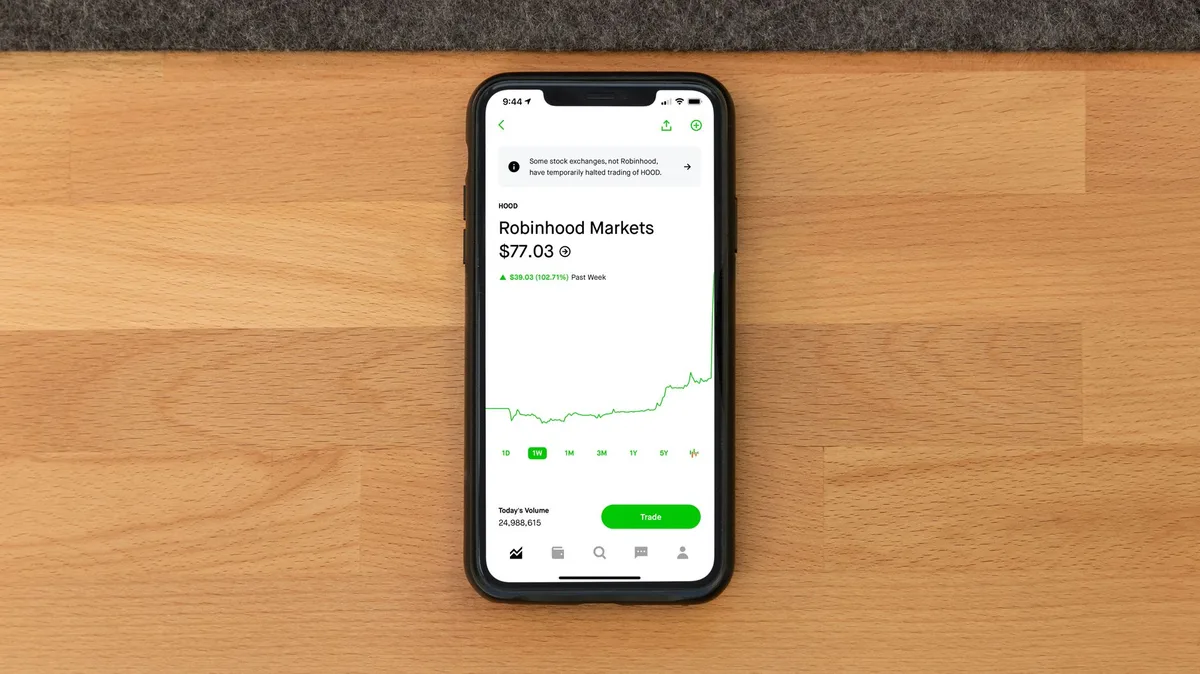
Popular payment apps like Cash App, Venmo, and Robinhood now include stock investing features with fractional shares and low minimums for beginners.

How to Spot an Investment Bubble: What the AI Boom Can Teach Everyday Investors
Discover 7 warning signs of investment bubbles using the AI boom as a case study. Learn to protect your portfolio from speculative excess.
