The Personal Finance Apps That Quietly Turned Into Investment Platforms
Payment and banking apps you already use now offer stock investing with fractional shares and micro-investing features designed for beginners.
Pexels - Andrew Neel · original
In this article
If you use Cash App to split dinner bills, Venmo to pay your roommate, or Robinhood to track market news, you already have an investment platform in your pocket. Over the past several years, popular payment and personal finance apps have quietly added stock investing features, turning everyday financial tools into entry points for first-time investors.
These apps are designed to lower the traditional barriers to investing: high account minimums, complex interfaces, and the intimidation factor of buying whole shares of expensive stocks. With fractional shares, automated features, and interfaces as simple as sending a payment, they meet users where they already are.
Which Apps Offer Investing Features
Several widely used apps now include stock and ETF investing alongside their core services.
Cash App, owned by Block (formerly Square), added Cash App Investing in 2019. Users can buy fractional shares of stocks and exchange-traded funds (ETFs) with as little as one dollar. The app integrates investing directly into the same interface used for peer-to-peer payments, making the transition feel natural for existing users (Investopedia, 2024).
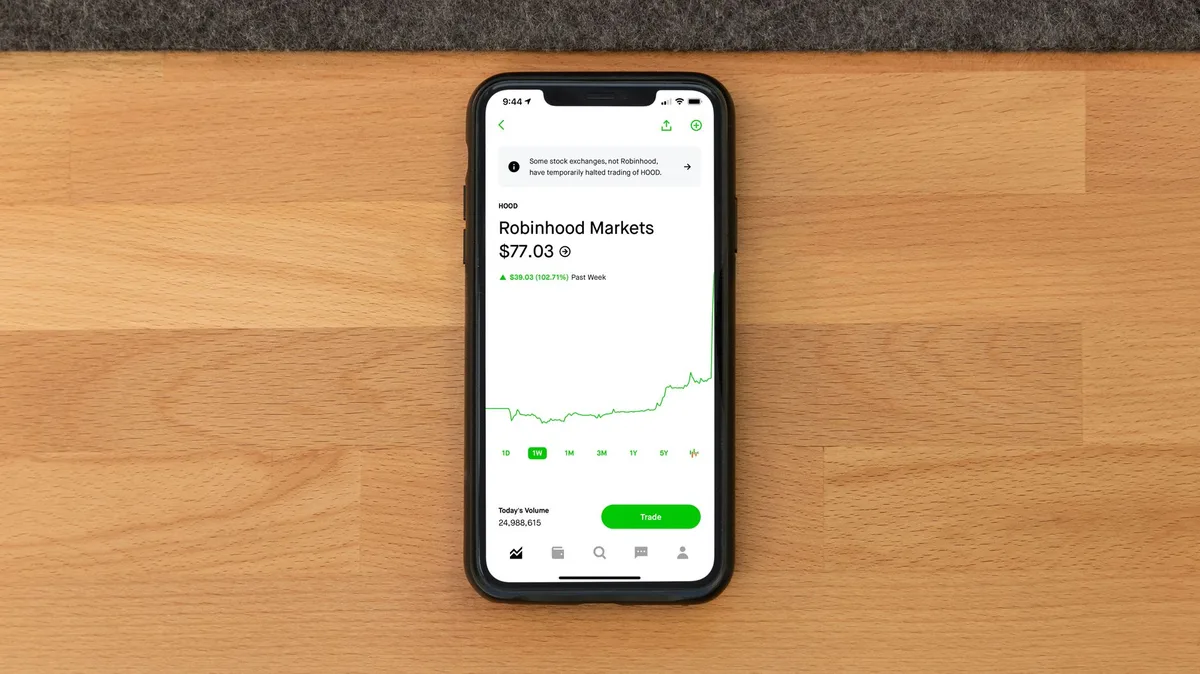
Robinhood popularized commission-free trading and fractional shares starting in 2013. While it began as a standalone investing app rather than a payment platform, it gained massive adoption among younger investors by eliminating trading fees and offering a mobile-first experience. According to the SEC, commission-free platforms have significantly expanded access to equity markets for retail investors (SEC, 2024).
Venmo, PayPal’s peer-to-peer payment service, does not currently offer direct stock investing within its core app. However, parent company PayPal has integrated crypto buying and, in some markets, stock investing features through its broader platform.
Acorns takes a different approach by rounding up everyday purchases to the nearest dollar and investing the spare change. A coffee that costs 3.50 dollars becomes 4.00 dollars, with the 50 cents going into a diversified portfolio of ETFs. This micro-investing model automates the investment process entirely.
Stash combines banking, budgeting, and investing in one app. Users can start with fractional shares, choose from themed investment portfolios, and access educational content designed for beginners.
How These Apps Encourage Investing
The core innovation is fractional share investing. Traditional brokerages required investors to buy whole shares, meaning a single share of a high-priced stock could cost hundreds or thousands of dollars. Fractional shares allow you to own a slice of a share for as little as one dollar. If a stock trades at 500 dollars per share and you invest 10 dollars, you own 0.02 shares and receive proportional dividends and capital gains.
Low or no account minimums remove another barrier. Many traditional brokerages historically required 500 to 3,000 dollars to open an account. Apps like Cash App and Robinhood have zero minimums, letting users start with whatever amount they have available.
Automated investing features reduce decision fatigue. Acorns’ round-up model, for example, invests without requiring active choices. Recurring deposit options on Robinhood and Stash enable dollar-cost averaging, the practice of investing a fixed amount at regular intervals regardless of market conditions. As covered in foundational texts such as Principles of Finance (OpenStax, 2022), dollar-cost averaging reduces the risk of mistiming the market by spreading purchases over time.
User interface design plays a significant role. These apps use familiar patterns from social media and payment apps: swipe gestures, push notifications, simple buy buttons. The result is an experience that feels less intimidating than traditional brokerage platforms.
Read also: Gen Z Is Putting Investing First: Platforms That Can Help Beginners Start
What Investors Should Consider
Accessibility does not eliminate risk. Stocks and ETFs are subject to market volatility, and you can lose money. FINRA emphasizes that investors should understand the risks of any investment before committing funds (FINRA, 2024).
Account protection matters. Verify that the app is a member of SIPC (Securities Investor Protection Corporation), which protects securities and cash in your account up to 500,000 dollars if the brokerage fails. This protection does not cover market losses, only brokerage insolvency.
Fee structures vary. While many apps advertise commission-free trading, some charge monthly subscription fees (Acorns and Stash both use subscription models), and others profit from payment for order flow, a practice where brokerages receive compensation for routing orders to specific market makers. Robinhood, for instance, generates revenue this way. The SEC has scrutinized this model, and investors should understand how their broker is compensated.
Tax reporting is your responsibility. Selling stocks triggers capital gains tax. Short-term gains (on assets held less than one year) are taxed as ordinary income, while long-term gains receive preferential rates. Apps provide Form 1099-B at tax time, but you must report these transactions to the IRS on Schedule D of Form 1040. Fractional shares are taxed the same way as whole shares.
Educational resources differ. Some apps, like Stash, emphasize investor education with articles and guided portfolios. Others, like Cash App, provide minimal guidance. First-time investors benefit from pairing app use with external learning from sources like the SEC’s Investor.gov or FINRA’s educational resources.
Practical Next Steps
If you already use one of these apps, enabling the investing feature is straightforward. Most require identity verification, linking a bank account, and agreeing to terms. Start with an amount you can afford to lose while you learn how the platform works.
For beginners, low-cost broad market index ETFs (such as those tracking the S&P 500 or total U.S. stock market) offer diversification in a single purchase. Avoid concentrating in individual stocks until you understand company analysis and sector risk.
Track what you invest and review your portfolio periodically, but resist the urge to react to daily price swings. Long-term investing benefits from consistency and patience, not frequent trading.
These apps have genuinely lowered the entry threshold to equity investing. Whether that encourages healthier financial habits or risky speculation depends entirely on how you use them. The tools are accessible; the discipline required to use them well is not automatic.
Disclaimer: This article is for educational purposes only and does not constitute personalized investment advice. Consult a financial advisor or tax professional for guidance specific to your situation.
Sources
- Investor.gov - Introduction to Investing (accessed )
- FINRA Investor Education (accessed )
- Investopedia Personal Finance (accessed )
- Principles of Finance (accessed )
Related articles
Gen Z Is Putting Investing First: Platforms That Can Help Beginners Start
Compare beginner-friendly investing platforms for Gen Z, including brokerages, robo-advisors, retirement accounts, and learning tools.

Index Fund Investing for Beginners: Vanguard vs Fidelity vs Schwab
Compare Vanguard, Fidelity, and Schwab for index fund investing. Learn which brokerage fits your budget, tax goals, and experience level.
How to Invest in ETFs: A Beginner Guide for American Investors
Step-by-step guide for beginners on how to invest in ETFs, from choosing a brokerage to building a diversified portfolio for long-term growth.
