Where to Put $1,000: Comparing Yields on Savings Accounts, CDs, and Treasury Bonds
When the Federal Reserve raises rates, your cash earns more. Here's how much $1,000 returns in high-yield savings accounts, CDs, and Treasury securities, plus which option fits your timeline.

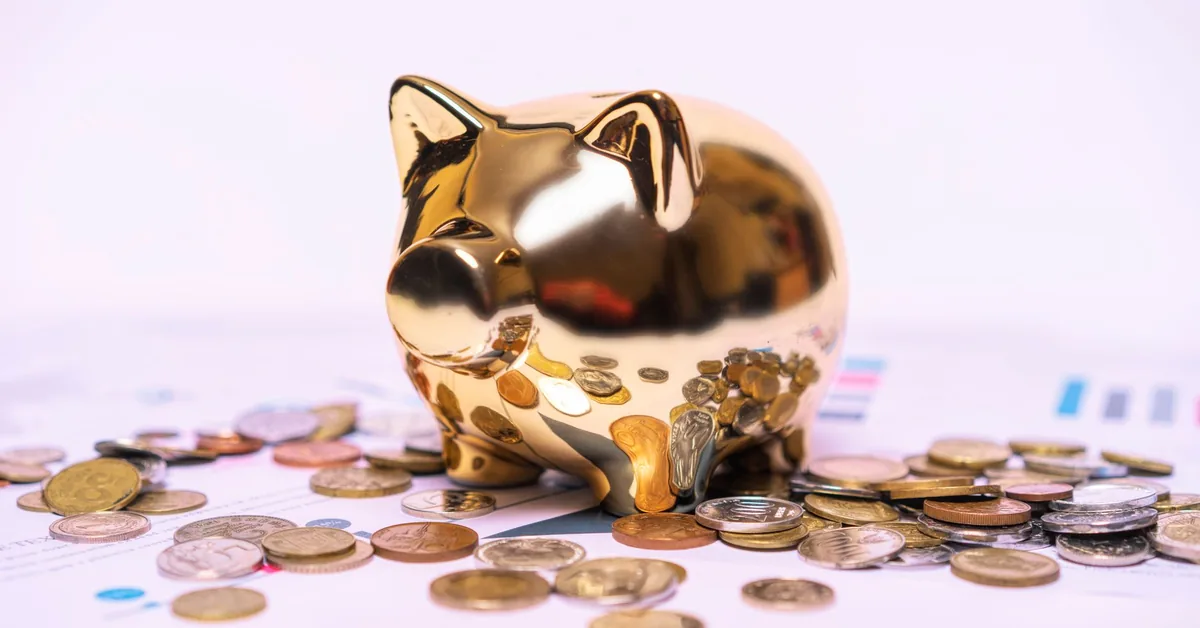
Pexels - Towfiqu barbhuiya · original
In this article
When the Federal Reserve adjusts interest rates, the ripple effect reaches every corner of the fixed-income market. Your emergency fund sitting in a checking account earning 0.01% suddenly has better options. Treasury bonds become more attractive. Banks compete for deposits by raising CD rates. If you have $1,000 to park safely, the question is not whether you will earn a return, but which vehicle gives you the best combination of yield, access, and security.
The gap between a typical savings account and a competitive fixed-income product can mean the difference between earning $5 and $50 on the same $1,000 over a year. This article compares the real-world returns across high-yield savings accounts, certificates of deposit, and US Treasury securities as of mid-2026, using concrete numbers and realistic rate scenarios. You will see exactly how much each option pays, what the trade-offs are, and which profile of saver benefits most from each choice.
What You Will Learn
By the end of this guide, you will understand how to calculate the actual return on $1,000 across the most common fixed-income options available to US savers. You will see a side-by-side comparison of yields, know the liquidity and penalty structures for each product, and get a decision framework based on your timeline and goals. Whether you need your cash available tomorrow or can lock it away for a year, you will know which product maximizes your return without taking on market risk.
Quick Comparison: Returns on $1,000
The table below shows estimated annual returns on $1,000 across the main fixed-income options, using representative rates as of June 2026. Rates vary by institution and term, so treat these as baseline figures and verify current offers before committing funds.
| Product | Typical APY | 1-Year Earnings (Simple) | Liquidity | FDIC/Treasury Protection |
|---|---|---|---|---|
| High-Yield Savings Account | 4.50% | $45.00 | Instant | FDIC up to $250,000 |
| 6-Month CD | 5.00% | $25.00 (6 months) | Locked until maturity | FDIC up to $250,000 |
| 1-Year CD | 5.25% | $52.50 | Locked until maturity | FDIC up to $250,000 |
| 3-Month Treasury Bill | 5.10% | $12.75 (3 months) | Tradable; matures in 3 months | US government backed |
| 1-Year Treasury Note | 5.15% | $51.50 | Tradable; matures in 1 year | US government backed |
| I Bond (Series I Savings Bond) | 5.27% composite* | $52.70 | Cannot redeem first 12 months | US government backed |
*I Bond rates adjust every six months based on inflation. The composite rate shown is illustrative and combines a fixed rate plus an inflation adjustment. (Federal Reserve, 2026)
High-Yield Savings Accounts: Maximum Flexibility
A high-yield savings account (HYSA) is the baseline option for any cash you might need on short notice. These accounts pay significantly more than traditional savings accounts while keeping your money fully liquid.
How It Works
You deposit funds into an FDIC-insured savings account at an online bank or credit union. The bank pays interest monthly, compounded daily or monthly depending on the institution. You can withdraw or transfer money at any time without penalty, subject to federal Regulation D limits (historically six withdrawals per month, though enforcement was suspended during the pandemic and the rule was later amended).
Real Numbers
At a 4.50% APY, $1,000 deposited on January 1 grows to $1,045.00 by December 31, assuming monthly compounding. If the rate holds steady all year, you earn $45 in interest. Many top-tier online banks offered rates in the 4.25% to 4.75% range as of mid-2026, with rates adjusting as the Federal Reserve moves the federal funds rate. (Investopedia, 2026)
Pros
- Instant access to your money with no penalty.
- FDIC insurance up to $250,000 per depositor, per institution. (FDIC, 2026)
- No minimum balance requirement at many online banks.
- Rate changes track the broader interest rate environment, so you benefit when the Fed raises rates.
Cons
- APY typically lags CD rates and Treasury yields by 0.25% to 0.75%.
- Variable rate means your return can drop if the Fed cuts rates.
- Some institutions cap the balance eligible for the top-tier rate.
Best For
Emergency funds, short-term savings goals (under six months), and cash you cannot afford to lock up. If you might need the money for a car repair, medical bill, or sudden opportunity, a HYSA keeps you flexible while still earning a meaningful return.
Certificates of Deposit: Higher Yield for a Lock-Up
A CD is a time deposit. You agree to leave your money untouched for a fixed term (commonly 3, 6, 12, or 24 months), and in exchange the bank guarantees a higher rate than a savings account. Break the CD early and you pay a penalty, typically several months of interest.
How It Works
You choose a term and deposit your funds. The bank locks in an APY for that period. At maturity, you receive your principal plus accrued interest. Many banks auto-renew CDs unless you withdraw or roll the funds into a new product during the grace period (usually 7 to 10 days after maturity).
Real Numbers
A 1-year CD at 5.25% APY returns $52.50 on a $1,000 deposit. A 6-month CD at 5.00% returns $25.00 for the half-year period, or $50.00 annualized if you roll the proceeds into a second 6-month CD at the same rate. Shorter terms (3 months) often pay less, while longer terms (2 to 5 years) can pay more, though the yield curve has occasionally inverted.
Early withdrawal penalties vary by bank. A common structure charges 90 to 180 days of interest for a 1-year CD. If you break a $1,000 CD after six months, you might forfeit $13 to $26, wiping out much of your gain.
Pros
- Fixed, guaranteed return that does not fluctuate with Fed rate changes.
- FDIC-insured up to $250,000 per depositor, per institution.
- Higher APY than HYSAs for the same term.
- No market risk; you know your exact payout at maturity.
Cons
- Locked funds. Early withdrawal triggers a penalty.
- If rates rise after you open the CD, you are stuck at the lower rate unless you break it and pay the penalty.
- Auto-renewal can trap you in a new term at a worse rate if you forget to act during the grace period.
Best For
Savers with a known timeline (tax refund parked for a year, home down payment fund on a 12-month horizon) who can commit to not touching the money. CDs make sense when you want to lock in today’s rate and you are confident you will not need the cash before maturity.
US Treasury Securities: Government-Backed, Tax-Advantaged
Treasury bills, notes, and bonds are issued by the US Department of the Treasury and backed by the full faith and credit of the federal government. They are considered the safest fixed-income investment available. Interest is exempt from state and local income taxes, a meaningful advantage if you live in a high-tax state.
How It Works
You buy Treasuries directly through TreasuryDirect.gov or via a brokerage. Treasury bills mature in one year or less and are sold at a discount (you pay less than face value and receive the full $1,000 at maturity; the difference is your interest). Treasury notes mature in 2 to 10 years and pay interest semiannually. Series I savings bonds (I Bonds) earn a composite rate that adjusts for inflation every six months.
Real Numbers
A 1-year Treasury note yielding 5.15% pays $51.50 on a $1,000 investment. A 3-month T-bill at 5.10% pays $12.75 per quarter, or roughly $51 annualized if you roll the proceeds into successive bills.
I Bonds are unique: you cannot redeem them for the first 12 months, and redeeming before five years costs you the last three months of interest. The composite rate as of mid-2026 hovered around 5.27%, combining a fixed rate (set at purchase and locked for 30 years) and an inflation adjustment (reset every six months). On a $1,000 I Bond, you would earn approximately $52.70 in the first year, though the rate will adjust at the six-month mark based on the Consumer Price Index.
Pros
- Zero credit risk; backed by the US government.
- State and local tax exemption on interest (federal tax still applies).
- Tradable on the secondary market (T-bills and T-notes) if you need liquidity before maturity.
- I Bonds offer inflation protection, a hedge against rising prices.
Cons
- TreasuryDirect.gov interface is dated and less user-friendly than modern banking apps.
- I Bonds cannot be redeemed for 12 months and carry a 3-month interest penalty if redeemed before five years.
- Yields on short-term Treasuries often match or only slightly exceed top-tier CD rates, so the advantage is marginal unless you value state tax savings or government backing over FDIC insurance.
Best For
Conservative investors who prioritize absolute safety, residents of high-tax states (California, New York, New Jersey) who benefit from the state tax exemption, and anyone building an inflation-protected cash reserve with I Bonds. Treasuries also suit those who want the option to sell before maturity without paying a penalty, since T-bills and T-notes trade on the secondary market.
Decision Framework: Which Option Fits Your Situation
Choose a High-Yield Savings Account If:
- You need access to your money within the next six months.
- You are building an emergency fund (3 to 6 months of expenses).
- You want your rate to adjust upward if the Fed raises rates again.
Choose a CD If:
- You have a specific timeline (6 to 12 months) and will not need the money before then.
- You want to lock in today’s rate and avoid the risk of future rate cuts.
- You value a guaranteed return over flexibility.
Choose Treasury Securities If:
- You live in a high-tax state and want to avoid state/local taxes on interest.
- You prioritize absolute safety and prefer government backing over FDIC insurance.
- You are willing to use TreasuryDirect.gov or a brokerage.
- (For I Bonds) You want inflation protection and can commit to a one-year lock-up.
Common Mistakes to Avoid
Chasing the highest APY without reading the fine print. Some banks advertise top-tier rates that apply only to balances under $10,000 or require you to meet monthly direct deposit and debit card usage thresholds. Verify the conditions before opening an account.
Forgetting the CD grace period. If you do not act during the 7- to 10-day window after a CD matures, most banks auto-renew at the current rate, which may be lower than when you opened the original CD. Set a calendar reminder a week before maturity.
Ignoring state tax savings on Treasuries. If you live in California and pay a 9.3% marginal state tax rate, the state tax exemption on Treasury interest can be worth an extra 0.25% to 0.50% in effective yield compared to a CD. Run the numbers.
Breaking a CD or I Bond too early. Early withdrawal penalties can erase months of interest. If you are not confident you can leave the money untouched, stick with a HYSA.
Assuming FDIC and Treasury backing are different in practice. Both are considered risk-free for amounts under $250,000. The real differences are liquidity, tax treatment, and user experience, not safety.
Frequently Asked Questions
Is my money safer in a Treasury bond than an FDIC-insured CD?
Both are effectively risk-free for typical deposit amounts. FDIC insurance protects up to $250,000 per depositor, per institution, per account category. Treasury securities are backed by the US government. The safety difference is negligible; choose based on rate, tax treatment, and liquidity.
Can I withdraw money from a CD without penalty?
Most CDs charge an early withdrawal penalty, often 90 to 180 days of interest for a 1-year term. A few banks offer no-penalty CDs with lower rates in exchange for flexibility. Read the terms before opening.
How often do HYSA rates change?
Rates are variable and adjust at the bank’s discretion, usually within days or weeks of a Federal Reserve rate change. If the Fed cuts rates by 0.25%, expect your HYSA APY to drop by a similar amount within the next statement cycle.
Do I pay taxes on interest from these investments?
Yes. Interest from HYSAs and CDs is taxable as ordinary income at the federal, state, and local levels. Interest from Treasury securities is subject to federal tax but exempt from state and local taxes. You will receive a 1099-INT form each January reporting the prior year’s interest.
What happens if I need the money from an I Bond in month 11?
You cannot redeem an I Bond before 12 months. If you might need the cash sooner, an I Bond is not the right vehicle. Use a HYSA or a 3-month T-bill instead.
Are there better options if I have more than $1,000?
The options above scale to larger balances, but with more capital you can diversify (spread $10,000 across a HYSA, a CD ladder, and Treasuries) or explore higher-yield strategies like short-term bond funds or money market funds. For amounts above $250,000, consider splitting deposits across multiple FDIC-insured institutions to maintain full coverage.
Conclusion
A $1,000 deposit is small enough to keep simple and large enough to benefit from the current rate environment. The choice between a high-yield savings account, a CD, and Treasury securities comes down to your timeline and priorities. If you need flexibility, a HYSA earning 4.50% delivers $45 per year with zero commitment. If you can lock up the funds for 12 months, a 5.25% CD or a 5.15% Treasury note pushes your return above $50. If you want inflation protection and can tolerate a one-year hold, an I Bond combines safety with a rate that adjusts to rising prices.
The information in this article is current as of June 2026. Interest rates change frequently, so verify the latest APYs at your bank or on TreasuryDirect.gov before making a decision. This content is for educational purposes and does not constitute personalized financial advice. For guidance tailored to your specific financial situation, consult a certified financial planner or registered investment advisor.
Open a spreadsheet, plug in the current rates from three institutions, and calculate the actual dollar difference over your timeline. The best fixed-income product is the one that matches your need for access, your comfort with lock-up periods, and the rate you can secure today.
Sources
- Selected Interest Rates (accessed )
- Personal Finance and Investing Guide (accessed )
- Deposit Insurance (accessed )
Related articles

The Fed Is Not Meeting This Week: What the Next Decision Could Mean for Savings and CD Rates
The Fed is not scheduled to meet this week. Here is what the next rate decision could mean for savings accounts and CDs.
The Fed's 2026 Outlook Shift Is Good News for Savers
The Fed's 2026 rate outlook shifted higher. See what that means for savings accounts, CDs, Treasury bills, and cash planning.
Fed Rate Cut Rumors: 3 Smart Moves To Protect Your Savings
Fed rate-cut talk can lower savings yields. Compare HYSAs, CDs, and Treasury bills before your cash earns less interest.
