Why £430 Billion Sits in Low-Return Cash Savings in the UK: The Case for Simpler ISAs
British savers hold hundreds of billions in cash accounts earning below inflation. ISA complexity and risk perception keep money stuck - here's why reform matters.

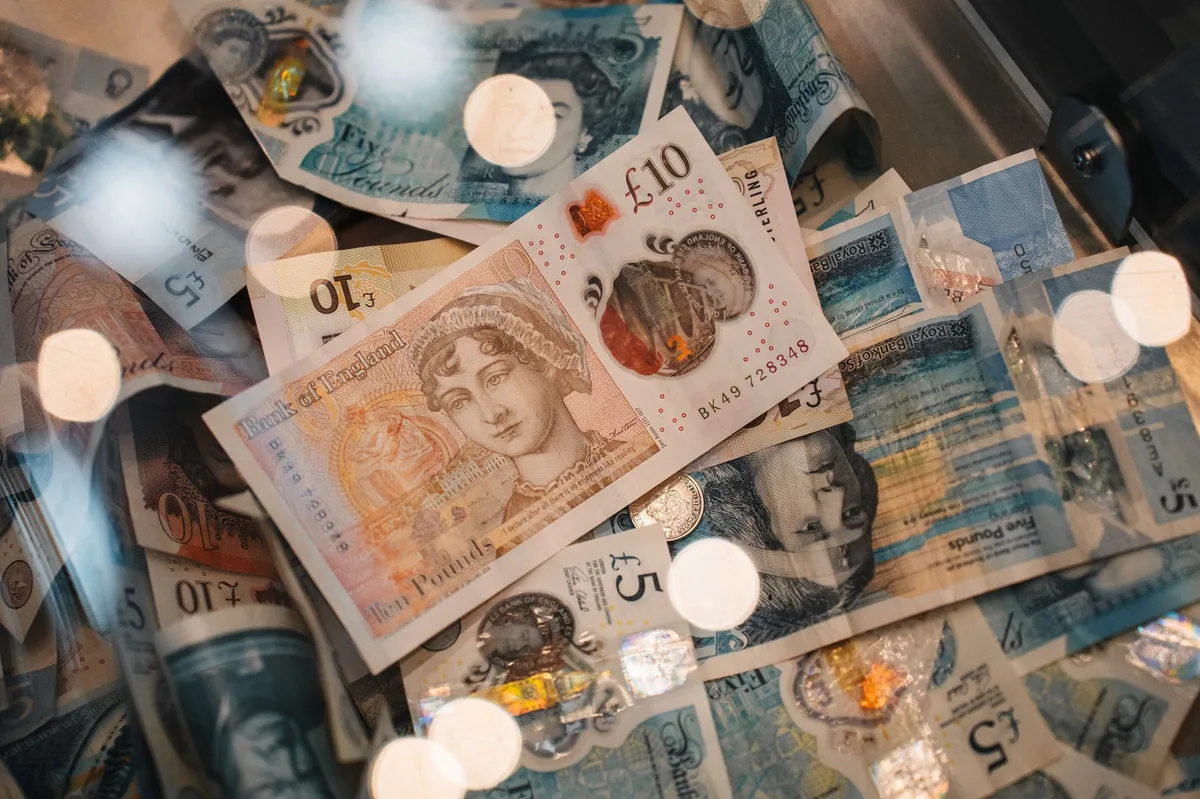
Pexels - Rafael Minguet Delgado · original
In this article
British households hold an estimated £430 billion or more in cash savings accounts that earn interest rates below inflation. The money sits safe, FSCS-protected and instantly accessible, but it loses purchasing power every year. Think tanks and consumer groups have long argued that simplifying the ISA system could help more people move from cash into investments that historically deliver stronger long-term returns. This is not about pushing risk onto cautious savers. It is about removing the friction that keeps people in cash even when a Stocks and Shares ISA might suit their goals and time horizon.
The real return problem
When inflation runs at 3 per cent and your cash ISA pays 2.5 per cent, your real return is negative. According to the Office for National Statistics, consumer price inflation has exceeded typical easy-access savings rates in many recent years (ONS, 2024). Money in the account grows in nominal terms, but its spending power shrinks. Over a decade, that erosion compounds. A £10,000 deposit losing 0.5 per cent in real terms each year falls to around £9,500 in today’s money by year ten, even though the account balance shows growth.
Cash savings have a vital role. An emergency fund covering three to six months of expenses belongs in an instant-access account or Cash ISA, not in equities that can fall 20 per cent in a bad year. The issue is scale. Hundreds of billions suggests that many savers hold far more in cash than their emergency reserve, often because they perceive investing as too complex, too risky, or both.
Why people stay in cash
Three factors dominate. First, FSCS protection. The Financial Services Compensation Scheme protects up to £85,000 per authorised institution, and that guarantee feels tangible (MoneyHelper, 2024). You cannot lose your capital to a market crash if it never enters the market.
Second, loss aversion. Behavioural research shows people feel the pain of a loss roughly twice as intensely as the pleasure of an equivalent gain. Seeing an account balance fall, even temporarily, triggers anxiety that an abstract discussion of long-term average returns does not overcome.
Third, the ISA landscape itself. The UK offers Cash ISAs, Stocks and Shares ISAs, Lifetime ISAs, and Innovative Finance ISAs. Each has distinct rules, contribution limits (£20,000 total across all ISA types per tax year, as of the 2026-27 tax year), withdrawal conditions, and tax treatments (HMRC, 2024). A new saver comparing products faces not just the cash versus investing decision, but also which ISA wrapper to use, which provider, which platform, and which funds. That complexity creates inertia.
The ISA reform argument
Simplifying ISAs means reducing the number of product types, aligning rules, and making the choice between cash and investing more transparent. One proposal that surfaces regularly: merge the Cash ISA and Stocks and Shares ISA into a single flexible ISA that holds both, with a unified allowance and the freedom to shift money between cash and investments without penalty. Another: default people into a diversified low-cost fund unless they actively choose cash, similar to auto-enrolment in workplace pensions.
The pension auto-enrolment precedent is instructive. Workplace pension participation soared after auto-enrolment launched, not because the investments suddenly became safer or simpler, but because inertia flipped. Doing nothing now means you invest a little each month. The same principle could apply to ISAs if the structure made investing the path of least resistance for long-term money.
Critics warn that defaulting people into investments exposes those with short time horizons to inappropriate risk. That concern is real. Any reform would need safeguards, clear communication about volatility, and an easy opt-out for those who genuinely need cash liquidity. The goal is not to eliminate Cash ISAs, but to stop cash from being the automatic choice for money that will not be touched for ten or twenty years.
Read also: Stocks and Shares ISA vs Cash ISA vs Taxable Accounts: Which Is Right for UK Beginners?
What investing actually involves
A Stocks and Shares ISA is just a tax wrapper. Inside it, you hold funds, ETFs, investment trusts, or individual shares. The simplest approach for most people: a low-cost global index tracker that owns thousands of companies across dozens of countries. You contribute regularly, ignore short-term noise, and benefit from compound growth over decades. As explained in foundational texts such as Principles of Finance, the power of compounding returns over long periods is the investor’s most reliable advantage (OpenStax, 2022).
UK equity markets (the FTSE 100, FTSE 250) have delivered average annual returns around 7 to 8 per cent including dividends over the very long term, though with significant volatility year to year. Global diversification smooths some of that volatility. The key is time. If you might need the money within five years, cash or short-dated gilts are safer. If your horizon is fifteen years or more, history suggests equities are likely to outpace inflation by a meaningful margin.
Common mistakes
The biggest mistake is treating all savings as a single pot. Separate your emergency fund (cash, always) from your long-term wealth-building money (often better invested). The second mistake is waiting for the perfect moment to invest. Markets feel risky when they are high and frightening when they are low. Pound-cost averaging (contributing the same amount each month regardless of market level) removes the timing decision and smooths your entry price over time.
A third mistake: assuming ISA tax advantages do not matter at modest sums. Even a £10,000 Stocks and Shares ISA growing at 6 per cent a year reaches £18,000 in ten years, tax-free. Outside an ISA, you would owe capital gains tax on the £8,000 gain once your annual CGT allowance is used (the allowance is currently modest and has been cut in recent years). The tax shelter compounds in value as your pot grows.
The path forward
If ISA simplification happens, it will be gradual. Policymakers move slowly on products that touch millions of savers. In the meantime, the system as it stands allows you to put up to £20,000 per tax year into ISAs, split however you like between cash and investing. You do not need reform to act. Open a Stocks and Shares ISA with a low-cost platform, choose a diversified fund, and set up a monthly direct debit. Keep your emergency fund separate in cash. Review once a year, but otherwise let compounding do its work.
The £430 billion in low-return cash is not a moral failure. It is a rational response to complexity, uncertainty, and the very real fear of loss. Simpler ISAs would lower one barrier. Financial education would lower another. But the most powerful change is the one you make yourself: deciding that money you will not need for a decade or more deserves the chance to grow ahead of inflation, and then taking the first small step to make that happen.
Disclaimer: This article provides general educational information and does not constitute regulated financial advice. Nexzoe is not authorised by the Financial Conduct Authority. Tax rules and ISA allowances change each tax year. Investment values can fall as well as rise, and you may get back less than you invest. Consider speaking to an FCA-authorised Independent Financial Adviser for guidance tailored to your personal circumstances. Verify current ISA allowances, contribution limits, and fund charges with HMRC or your chosen provider before making any decisions.
Sources
- Individual Savings Accounts (ISAs) (accessed )
- Types of Savings Accounts (accessed )
- Inflation and Price Indices (accessed )
- Principles of Finance (accessed )
Related articles
Could a Cut in Cash ISA Allowances Boost UK Stock Market Investing?
Would cutting Cash ISA allowances push UK savers into stocks? We examine the policy proposal, behavioural barriers, and real-world implications for investors.

Stocks and Shares ISA vs Cash ISA vs Taxable Accounts: Which Is Right for UK Beginners?
Compare Stocks and Shares ISA, Cash ISA and taxable accounts for UK beginners. Discover tax benefits, risks and which investment wrapper suits your goals.
Cash ISA vs Stocks and Shares ISA in the UK: Which Is Better for Your Goals in 2027
Cash ISA or stocks and shares ISA? Discover which tax-free account suits your 2027 goals, risk tolerance and time horizon in this UK guide.
