How Younger Investors Are Using AI for Investment Advice in Australia
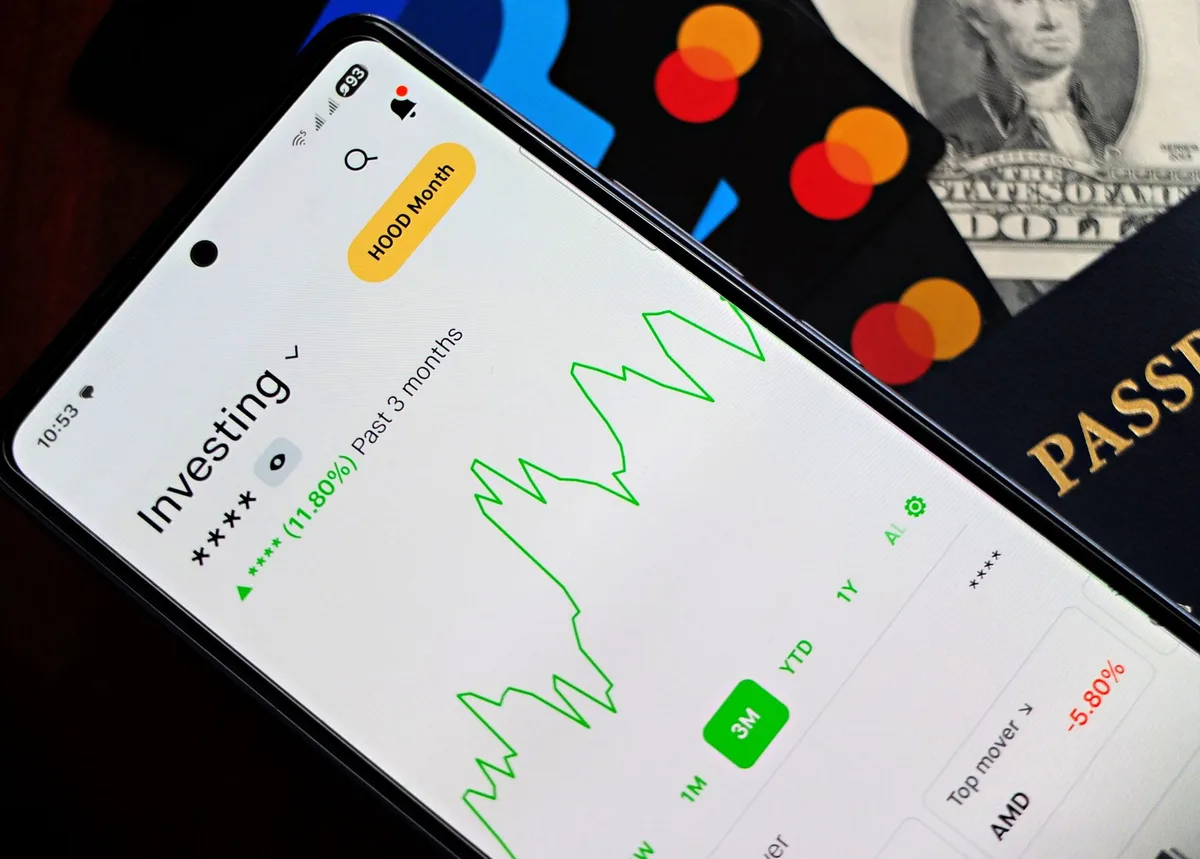
A growing number of younger Australian investors are turning to artificial intelligence for investment guidance, reshaping how a new generation approaches wealth building.
Pexels - DΛVΞ GΛRCIΛ · original
In this article
This article provides general information only and does not constitute personal financial advice. It has been prepared without taking into account your objectives, financial situation or needs. Before acting on any information in this article, you should consider whether it is appropriate for you and seek advice from a licensed financial adviser if necessary.
A quiet revolution is underway in Australian investing. Younger investors, particularly millennials and Gen Z Australians, are increasingly bypassing traditional financial advisers in favour of artificial intelligence tools that promise instant, low-cost investment guidance. From robo-advisers that build diversified portfolios to AI chatbots that analyse ASX shares, these digital tools are reshaping how a new generation approaches wealth building.
The shift reflects broader changes in how younger Australians manage money: comfortable with technology, sceptical of high fees, and hungry for accessible financial education. But as AI becomes a mainstream investment companion, understanding what these tools can and cannot do is critical for making sound financial decisions.
What Is AI Investment Advice?
In the Australian context, AI investment advice takes several forms. Robo-advisers are automated platforms that build and manage investment portfolios based on your answers to questions about risk tolerance, time horizon, and financial goals. These platforms typically invest in diversified portfolios of exchange-traded funds (ETFs) listed on the ASX, rebalancing automatically to maintain target allocations.
AI chatbots and analysis tools represent a newer category. These use large language models to answer investment questions, explain financial concepts, analyse company reports, or screen ASX shares based on criteria such as dividend yield or price-to-earnings ratios. Some platforms integrate AI into broader investment research tools, combining algorithmic analysis with traditional fundamental data.
The distinction matters because of how Australian financial regulation treats different types of advice. Financial advice in Australia falls into two categories: general advice and personal advice. Personal advice considers your individual circumstances and requires a licensed financial adviser. General advice does not take your situation into account and can be provided by unlicensed platforms, including many AI tools.
Why Younger Australians Are Turning to AI
Cost sits at the heart of AI’s appeal. Traditional financial advisers in Australia typically charge between $3,000 and $5,000 for comprehensive advice, with ongoing fees for portfolio management. Robo-advisers, by contrast, often charge annual management fees of 0.2% to 0.6% of assets under management, with no upfront advice fees. For a younger investor with $20,000 to invest, that translates to $40 to $120 per year versus thousands for traditional advice.
Accessibility plays an equally important role. AI tools operate 24/7, require no appointments, and impose no minimum investment thresholds that might exclude younger investors with modest starting capital. The barriers that once made professional investment advice feel out of reach for someone in their twenties or early thirties, still building their first significant savings outside superannuation, have largely disappeared.
Younger Australians also bring digital fluency to investing. A generation raised on apps, algorithms, and instant information expects financial services to work the same way. AI investment tools meet that expectation, delivering portfolio recommendations or share analysis in seconds rather than weeks.
How AI Investment Tools Work in Practice
Robo-advisers follow a structured process. After assessing your risk profile through a questionnaire, the platform constructs a portfolio weighted across Australian shares (typically via an ASX 200 or ASX 300 ETF), international shares, Australian bonds or fixed income, and sometimes alternative assets such as A-REITs. As covered in foundational texts such as Principles of Finance, diversification across asset classes reduces portfolio risk while maintaining return potential.
The platform monitors your portfolio and rebalances when allocations drift from targets due to market movements. For instance, if Australian shares surge and represent 65% of your portfolio instead of the intended 50%, the robo-adviser sells shares and buys bonds to restore the original balance. This automatic discipline can prevent the emotional decision-making that often undermines individual investors.
AI chatbots operate differently. They generate responses based on training data and patterns, answering questions or providing analysis. An investor might ask an AI tool to compare the dividend yields of major ASX banks, explain franking credits, or summarise the latest annual report from BHP. The tool processes the query and returns an answer drawn from its knowledge base.
The ASIC Regulatory Framework
Australian Securities and Investments Commission (ASIC) regulates financial advice to protect consumers. Robo-advisers offering personal advice must hold an Australian Financial Services Licence and meet the same regulatory obligations as human advisers, including acting in the client’s best interests. Platforms providing only general advice face lighter regulatory requirements but must clearly disclose that they have not considered your personal circumstances.
Most AI chatbots and analysis tools provide general advice only, if they provide advice at all. This creates a regulatory grey zone. A tool that screens ASX shares based on your specified criteria (dividend yield above 5%, market capitalisation above $1 billion) provides information, not advice. A tool that recommends you buy specific shares based on your stated goals crosses into advice territory.
Read also: Compulsory Super and Property Obsession Hide Australia’s Investing Knowledge Gap
The distinction matters because general advice carries no obligation to suit your situation. An AI tool might recommend high-growth small-cap shares, unaware that you are approaching retirement and need capital preservation, or suggest gearing into investment property without knowing your existing debt levels.
Risks and Limitations
AI investment advice carries genuine risks that younger investors must understand. Accuracy represents the most immediate concern. AI models trained on historical data can produce plausible-sounding responses that are factually wrong, outdated, or based on incorrect assumptions about Australian tax law, market conditions, or regulatory requirements.
Accountability poses another challenge. According to the Australian Financial Complaints Authority, when a licensed financial adviser provides unsuitable advice, you have recourse through AFCA’s complaint process (AFCA, 2026). When an AI chatbot provides poor guidance, your options narrow considerably. Most platforms disclaim liability for investment losses resulting from AI-generated advice.
AI tools lack the contextual understanding that human advisers bring to financial planning. A robo-adviser knows your nominated risk tolerance but not that you are planning to buy a home in two years, which would make a high allocation to shares inappropriate. An AI chatbot can explain capital gains tax rules but cannot factor in your specific circumstances, such as whether you have carried-forward capital losses or whether the 50% CGT discount applies to your situation.
The tools also cannot provide the holistic advice that comprehensive financial planning requires. Investing sits within a broader financial picture that includes superannuation, insurance, estate planning, tax minimisation, and debt management. As noted by the ATO’s investment guidance for individuals and families, effective wealth building requires coordinating investment decisions with tax obligations and superannuation contributions (ATO, 2026). AI tools optimise one piece without seeing how it fits with the others.
Using AI Advice Responsibly
Younger Australians can harness AI investment tools effectively by understanding their proper role. Treat AI as a research assistant and educational resource, not a replacement for professional advice on complex decisions. Use AI chatbots to learn how franking credits work, understand the difference between growth and value investing, or screen the ASX 200 for shares meeting specific criteria. Do not rely on AI to decide whether you should salary-sacrifice into super, establish a self-managed super fund, or use negative gearing to invest in property.
Verify any specific claims or figures an AI tool provides. If a chatbot states that concessional superannuation contribution caps are $30,000 for everyone, check the ATO website. Contribution caps and tax thresholds change, and AI training data lags current policy.
Combine AI tools with authoritative sources. The ATO publications, ASIC resources, and established financial education platforms provide reliable, current information tailored to Australian rules and conditions. Use AI to generate questions and hypotheses, then validate against these primary sources.
For significant financial decisions, particularly those involving large sums, complex tax implications, or major life events such as buying a home, having a child, or approaching retirement, consult a licensed financial adviser who can provide personal advice suited to your circumstances.
The Future of AI in Australian Investing
AI investment tools will continue to evolve and improve. Models will become more accurate, interfaces more intuitive, and integration with traditional financial services deeper. The line between robo-advice and human advice will blur as hybrid models emerge, combining algorithmic portfolio construction with human oversight and advice on complex questions.
Regulation will likely tighten as ASIC grapples with how to supervise AI-generated financial advice at scale. Expect clearer disclosure requirements, stronger accuracy standards, and potentially licensing obligations for platforms offering sophisticated AI advice tools.
For younger Australian investors, AI represents a powerful addition to the wealth-building toolkit, not a complete solution. Used wisely, AI tools democratise access to investment knowledge and portfolio management capabilities once reserved for wealthy clients of traditional advisers. Used carelessly, they can lead to unsuitable investments, missed opportunities, and costly mistakes that compound over decades.
The investing bonanza younger Australians are experiencing through AI comes with a responsibility to understand the technology’s limits, verify its outputs, and know when human expertise remains essential. The future of investing is neither purely human nor purely artificial, but a thoughtful blend of both.
Sources
- Investments and Assets for Individuals and Families (accessed )
- Make a Complaint (accessed )
- ASIC Regulation (accessed )
- Principles of Finance (accessed )
Related articles
Compulsory Super and Property Obsession Hide Australia's Investing Knowledge Gap
Global X CEO highlights how Australia's compulsory super and property obsession mask a critical investing knowledge gap. What this means for your portfolio.

How to Protect Your Investments and Super from Financial Fraud in Australia
Protect your super and investments from fraud with these practical steps. Learn to identify scams, secure your accounts, and respond to suspicious activity.

Emergency Fund Calculator: How Much to Save and Where to Keep It in Australia
Calculate how much to save in your emergency fund and discover the best places to keep it in Australia for instant access and security.
